Psychiatric Journal Reports Human Pheromones may Play Beneficial Role in Sexual Therapy and Reproductive Health
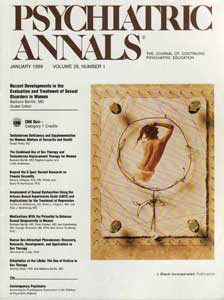
Copyright ©1999, Slack, Inc. Footnotes Omitted
*Please click here for more on pheromones and books from Athena Institute
HUMAN SEX-ATTRACTANT PHEROMONES: DISCOVERY, RESEARCH, DEVELOPMENT, AND APPLICATION IN SEX THERAPY.
by Winnifred B. Cutler, Ph.D. in PSYCHIATRIC ANNALS - The Journal of Continuing Psychiatric Education, Jan. 1999, Volume 29, No. 1, pages 54-59
Background: January 1999
An article by Winnifred Cutler, Ph.D., in PSYCHIATRIC ANNALS reviews human pheromone research and suggests potential therapeutic benefits of topical pheromone application in conjunction with sexual counseling. Intended for professionals in the psychiatric field, the peer-reviewed medical journal has devoted this issue to current perspectives on women's sexuality and sexual therapies.
Dr. Cutler's article, HUMAN SEX-ATTRACTANT PHEROMONES: DISCOVERY, RESEARCH, DEVELOPMENT, AND APPLICATION IN SEX THERAPY, chronicles the evolution from animal pheromone research to human pheromone studies and explains pheromonal influence on menstrual cycles, fertility, and sexual attraction. Psychiatrists counseling patients with sexual deficits will learn that a partner's decline of sexual interest may be due to diminished pheromonal output caused by hormonal changes, aging, and pelvic surgeries. The diminution of pheromones may be balanced by topical applications of human synthesized sex-attractant type pheromone cosmetics.
PSYCHIATRIC ANNALS is sponsored by The American Medical Association which qualified this journal issue for Continuing Medical Education (CME) credits. A copy of the full reprinted article can be obtained through Athena Institute (www.AthenaInstitute.com) or academic libraries.
Click here to see copy of the full article. It is also in most university libraries
A bibliography of Dr. Cutler's Published Work
The Science of Attraction:
(Psychiatric Annals Excerpt Pge. 54)
Physical attraction is the fundamental precondition for the sexual dance between a man and a woman. Although appearance, self-confidence, and social behavior all contribute to sexual attractiveness, the reproductive endocrine system appears to play an independent role. Recent discoveries of invisible, odorless, sex attractants, called pheromones, offer biologic ways to use cosmetics for improving the romantic lives of men and women. As an adjunct to existing therapies, human pheromones may serve to catalyze the therapeutic process.
(Psychiatric Annals Excerpt Pge.55)
From 1975 through 1986, in a series of studies at the University of Pennsylvania, my colleagues and I investigated relationships between the timing of women's sexual behavior and aspects of their reproductive endocrinology. At Stanford University with different colleagues, I investigated similar relationships among perimenopausal women. Each of the studies demonstrated health benefits from intimate connections with another person, provided the timing was appropriate.
Human Pheromone as Sex Attractant: The Experimental Reports
(Psychiatric Annals Excerpt Pge.57)
With colleagues, I have conducted two double-blind, placebo-controlled experiments of sexual responses to pheromones that have been reported to the scientific community. Our first study of women used the data collected in 1986 in the Cutler and Preti experiments... these data were analyzed according to sexual behavior patterns. The first study of men, in 1994, added a man's proprietary pheromone formula to each man's usual aftershave fragrances and tested for changes in sexual behavior. Both studies found that human pheromones, but not placebo, produced significant increases over baseline in sexual behavior involving a partner. ***
A proprietary, patent-pending cosmetic fragrance additive for women (Athena Pheromone 1013tm) was brought to market in 1993 as a putative sex attractant with positive results among healthy women. Positive results were also reported in one medical sample of post-hysterectomy women taking hormone replacement therapy (HRT) and complaining of loss of sexual attractiveness; the study was terminated by the medical group when its leader concluded that 70% of the women using the pheromone cosmetic were helped.
Published in 1998, our 1994 double-blind, placebo-controlled experiment of 38 heterosexual men tested a proprietary, patent-pending formula that contained a laboratory-synthesized version of human pheromones (marketed as Athena Pheromone 10Xtm). The study showed that compared with the placebo group, the men using the pheromone for 6 weeks recorded a statistically significant increase over their own 2-week baseline behavior.
Thus, in this prospective, double-blind, placebo-controlled study, human pheromones caused a statistically significant and distinct increase in those romantic behaviors in which a woman plays a major role... These findings suggest an increased sexual attractiveness of the men without an influence on the men's sexual motivation, further supporting the hypothesis of the pheromonal nature of apocrine secretions in humans. Practitioners should use skepticism and discrimination in recommending pheromone products to their sexual therapy patients. Any products claiming that they are an "aphrodisiac" should be avoided because this is a drug claim that is regarded by the Food and Drug Administration as illegal and no such studies have been reported. Many commercial products claiming they contain pheromone ingredients may actually contain the previously discussed boar pheromone and may act as a repellent.
To date, the only product tested under double-blind, placebo-controlled conditions with a study published in a peer reviewed journal is Athena Institute's synthesized human male pheromone cosmetic fragrance additive. In this study, discussed above, 74% of the heterosexual men using the pheromone for 6 weeks recorded increased romantic attention from women compared with their own 2-week baseline. Not an aphrodisiac, these products are cosmetics that apparently work to increase romantic attention from others.
Conclusion: Uses for Topical Pheromone Cosmetic in Sexual Therapy
(Psychiatric Annals Excerpt Pge.58)
Because an increase in sexual attractiveness from the use of a cosmetic pheromone was demonstrated by the recently published study (ARCHIVES OF SEXUAL BEHAVIOR: An Interdisciplinary Research Journal. Plenum Press - New York, London. Vol. 27, No.1, 1998), it is logical to address possible uses and benefits.
In nature, pheromone output appears to crest during the peak years of fertility and declines with passage into the post-fertile years. The frontier of therapeutic applications involving cosmetic pheromone additives has exciting potential.
Some of the possible paths to pursue for topical pheromones in sexual therapy include: A patient adds pheromone to his or her own fragrance to increase his or her partner's sexual interest. In conjunction with psychotherapy, this change in the partner's response is incorporated into the healthy emotional functioning of the patient. Patients with infertility problems -- with or without known pathology -- need a romantic life.
Studies reviewed above have shown that couples trying to conceive a viable pregnancy benefit from regular weekly sexual intercourse because the behavior increases the likelihood of a fertile-type cycle in the woman. Intrusive infertility treatments usually compromise some of the romance between the couple.
*** Because cosmetic pheromones can promote or restore romance, they may serve as a useful adjunct to both the psychologic and the reproductive endocrine treatments. Sex-attractant type pheromone cosmetics can be incorporated into the user's daily routines to increase the chances for therapeutic benefits.
End of Excerpt
" My research has consistently focused on what behavior a woman can engage in to increase her power, well-being, and vitality."
---Winnifred B. Cutler, Ph.D.
A portion of the profits from our book and pheromone sales helps to fund Athena's on-going research.